Download Call for Papers (PDF)
Submission Deadline: December 31, 2026
Historically, wireless communication and sensing systems have treated the electromagnetic propagation environment as a passive, unpredictable, and uncontrollable entity. In conventional environments, RF signals inevitably suffer from severe attenuation, multipath fading, and physical blockages. As we advance toward next-generation technologies—such as 6G communications, high-resolution automotive radar, and massive Internet of Things (IoT) deployments—operating at millimeter-wave and sub-THz frequencies, these environmental impairments become critical bottlenecks that traditional base-stations optimization can no longer overcome.
In addition, there is a paradigm shift by looking at the multi-path propagation channel as an exploitable asset rather than a passive impediment thus moving beyond the unsustainable approach of "more power and more emissions" to mitigate electromagnetic congestion.
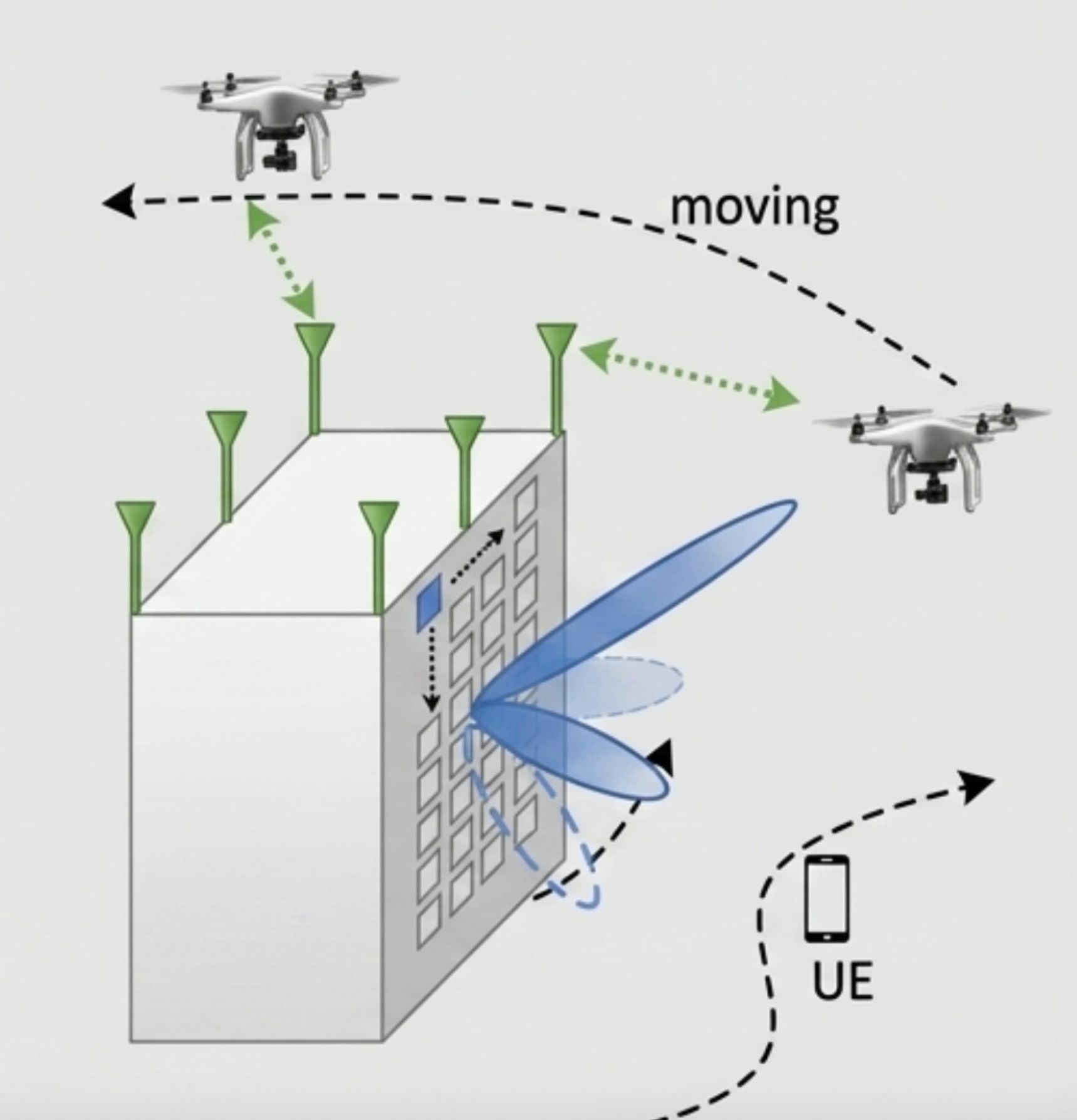
The advent of Smart EM/RF Environments has represented a revolutionary paradigm shift in electromagnetics and wireless engineering. Rather than simply adapting to a harsh propagation channel, this new approach seeks to actively or passively control the environment itself. By deploying programmable physical layers, such as Reconfigurable Intelligent Surfaces (RIS), and advanced passive EM skins, the physical space transforms from a rigid obstacle into a dynamic, customizable asset. This enables the deterministic manipulation of wave scattering, reflection, and refraction, allowing engineers to dynamically steer beams, mitigate interference, eliminate blind spots, and enhance physical layer security.
The advent of Smart EM/RF Environments has represented a revolutionary paradigm shift in electromagnetics and wireless engineering. Rather than simply adapting to a harsh propagation channel, this new approach seeks to actively or passively control the environment itself. By deploying programmable physical layers, such as Reconfigurable Intelligent Surfaces (RIS), and advanced passive EM skins, the physical space transforms from a rigid obstacle into a dynamic, customizable asset. This enables the deterministic manipulation of wave scattering, reflection, and refraction, allowing engineers to dynamically steer beams, mitigate interference, eliminate blind spots, and enhance physical layer security.
Therefore, this Special Issue is aimed at providing a premier platform for researchers, engineers, and academicians to disseminate cutting-edge research, novel theoretical frameworks, and practical experimental validations that drive the evolution of Smart EM/RF Environments by addressing the next evolutionary leap from a lab-scale successful experiment to a real-world competitive solution to support next generations wireless evolutions.
Potential topics include but are not limited to the following:
- Fundamental Theory: Information theory, channel modeling, and performance limits of SEME-assisted wireless systems
- Surface EM Design and Metamaterials: AI-enhanced micro-scale design of SEME devices, conformal metasurfaces, and cost-effective fabrication techniques.
- Algorithmic Optimization: Machine Learning and Deep Learning frameworks for real-time surface configuration, channel estimation, and dynamic beamforming in highly dynamic, high-frequency (mm-Wave/sub-THz) urban and indoor scenarios. Methodologies for dealing with the computational complexity of large-scale, multi-objective smart EM deployments.
- Next-Generation Integration: Deployment strategies for Smart EM Environments in 5G-Advanced and 6G networks, including massive MIMO and joint communications and sensing (JCAS).
- Experimental Validations and Testbeds: Real-world implementations, proof-of-concepts, and industrial applications of smart electromagnetic environments.
- Emerging Applications: Smart factories, autonomous vehicular networks, biomedical EM sensing, and physical layer security.
Guest Editors:
Filiberto Bilotti
Roma Tre University Roma, Italy
Merouane Debbah
Khalifa University of Science and Technology, UAE
Marco Di Renzo
King's College London, UK
Danilo Erricolo
University of Illinois Chicago, USA
Andrea Massa
University of Trento, Italy
Zhongxiang Shen
Yangtze Delta Region Academy of Beijing Institute of Technology, China