Download Call for Papers (PDF)
Submission Deadline: August 31, 2027

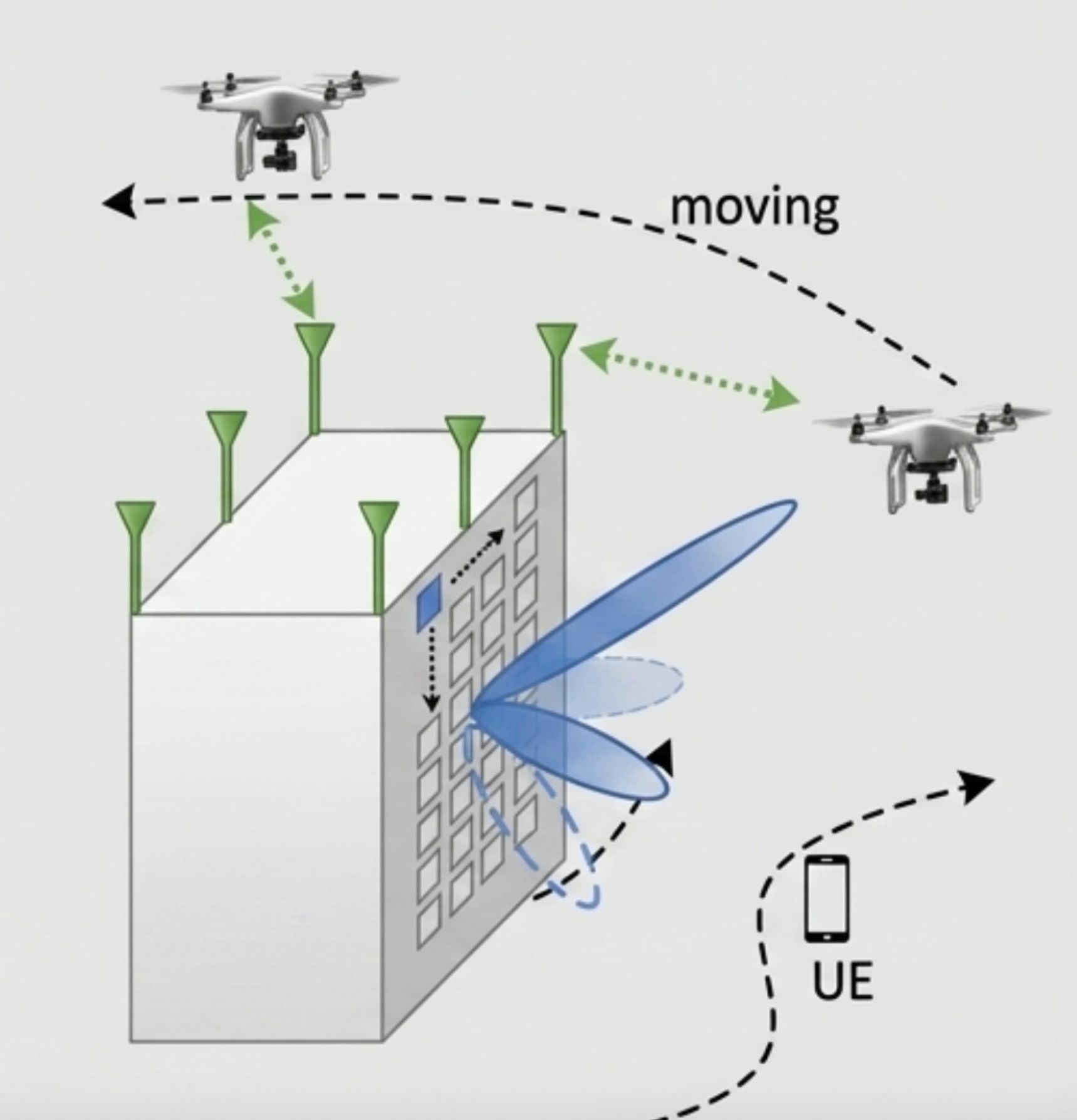
Recent advancements in 5G and the evolution toward 6G wireless networks have posed new challenges to antenna systems that are required to meet requirements such as high data rate, low latency, low cost, improved energy efficiency, and better spectrum utilization. Massive multiple-input multiple-output (MIMO) systems and advanced beamforming techniques have emerged as key strategic drivers for addressing these challenges. It has been demonstrated that by utilizing large-scale antenna arrays, intelligent beam control, and hybrid-beamforming architectures a significant enhancement in spectral and energy performance can be achieved. These advancements have led researchers to explore the field with a renewed interest of late.
The special section aims to present lasting progress in massive MIMO antennas systems and beamforming technologies. It will be focused on emerging techniques advancing state-of-the-art in theoretical modeling, novel antenna designs, signal processing methods, and experimental demonstrations for 5G and beyond. Moreover, this special issue is devoted to publishing high-quality research papers on recent advances in simulation techniques, theoretical formulations, inverse-design and machine learning approaches, as well as experimental efforts specifically tailored for beamforming systems and MIMO architecture. The scope encompasses a wide range of topics, including both fundamental aspects and practical implementations of massive MIMO antennas, channel modeling, reconfigurable array architectures and intelligent surfaces, and related topics.
This Special Section will bring together researchers from the antennas and propagation, microwave engineering, RFID, wireless power transfer, and sensing communities and will highlight recent advances that support the development of next-generation energy-autonomous wireless systems.
Potential topics include but are not limited to the following:
- Compact, wideband, multiband, and high-efficiency antenna array designs such as planar, conformal, and reconfigurable architectures
- Analog, digital, and hybrid beamforming techniques
- Beamforming networks such as Buttler matrix, Blas matrix, Nolen matrix and other emerging networks
- Artificial Intelligence, Machine Learning and Optimization enabled beamforming
- Reconfigurable Intelligent Surface (RIS) enabled beamforming technologies
- Beamforming for Integrated Sensing and Communications (ISAC)
- Channel modeling for massive MIMO at mmWave and sub-THz bands including propagation effects such as beam squinting, spatial consistency, and multipath fading
- Measurement campaigns and experimental validations including antenna gain, radiation efficiency, polarization purity, near-field effects, and mutual coupling
- Integration with emerging technologies for non-terrestrial networks such as UAVs, satellites and high-altitude platforms for integrated sensing and communications
- Experimental methods and specific development of testbeds, hardware prototypes for beam management in dynamic and mobile environments
- Beamforming technologies for energy reduction and sustainable communication networks
- Reconfigurable
- Beamforming techniques
- Analogue and hybrid beamforming
- Artificial intelligence
- MIMO channel modeling
- Antenna measurement
- Multiband Antennas
Arkaprovo Das
The Pennsylvania State University, USA
Manushanker Balasubramanian
The Pennsylvania State University, USA
Douglas H. Werner
The Pennsylvania State University, USA
Yingjie Jay Guo
University of Technology Sydney, Australia
Qammer Abbasi
University of Glasgow, United Kingdom
François Rottenberg
KU Leuven, Belgium