

Each year the IEEE and IEEE AP-S recognize individuals or groups of individuals who have made an impact on technology or society in distinct ways. The IEEE Electromagnetics Award and the IEEE AP-S Field Awards recognize distinguished contributions based upon technical achievements and/or excellence in education and teaching.
2026 IEEE Electromagnetics Award
Prof. John Volakis “For contributions to computational electromagnetics and antenna technologies.”
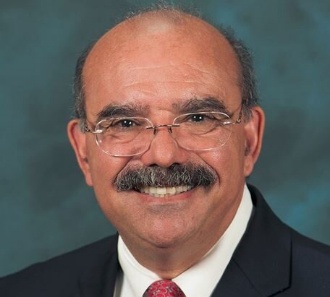
John L. Volakis is an IEEE, ACES, AAAS, NAI, Fellow, ASEMFL and URSI Fellow. He is the Lucent CALA Distinguished Professor at Florida International University, where he served as Dean of Engineering and Computing from 2017-2023. His career spans over 4 decades: 2 years at Rockwell International North Americal Aircraft (now Boeing), 19 years on the faculty at The Univ of Michigan-Ann Arbor, 15 years at The Ohio State University, and 9 years at Florida International Univ. in Miami, Florida. He is an Emeritus Faculty at The Ohio State University.
Volakis grew up in the mastic villages of Chios, Greece and immigrated to the U.S.A. during the last year of high school in 1973. He obtained his B.E. Degree, summa cum laude, in 1978 from Youngstown State Univ., Youngstown, Ohio, M.Sc. in 1979 from The Ohio State Univ., Columbus, Ohio and the Ph.D. degree in 1982, also from the Ohio State Univ. In 1984, he was appointed Assistant Professor at The University of Michigan, Ann Arbor, MI, becoming a full Professor in 1994. He also served as the Director of the Radiation Laboratory from 1998 to 2000. From January 2003 to Aug. 2017, he was the Roy and Lois Chope Chair Professor of Engineering at the Ohio State University, Columbus, Ohio and served as the Director of the ElectroScience Laboratory from 2003 to 2016.
Volakis is an internationally recognized leader in electromagnetics, celebrated for pioneering contributions to ultra-wideband and small antennas, medical textile sensors, low-power beamforming transceivers, computational electromagnetics, and diffraction from impedance surfaces. He is especially well-known for his work in high frequency finite element methods, where he played an instrumental role in advancing them into widely adopted commercial toolsets. He is also a pioneer in battery-less brain sensors, wearable electronics and e-textiles, with critical applications in healthcare. His work on wideband conformal antennas led to the development of the celebrated and widely adapted tightly coupled dipole arrays for industry and government applications. During the early part of his career, he worked on model-based measurements to speed-up the design of large airframes, developed skew incidence diffraction coefficients from impedance edges, and pioneered the computation of jet engine inlet scattering. Throughout his career, he supported many of his students in starting and establishing companies while many others became leaders in industry and academia.
He has published over 475 journal papers, more than 1100 conference papers, 33 chapters, and 49 patents/disclosures. As of April 2026, his google h-index=84 with 35,000 citations. He has mentored over 115 Ph.Ds/Post-Docs and has written with them 51 papers that received best paper awards. He is also the authors of 9 books, including the popular Antenna Handbook, referred to as the “antenna bible.” In 2004, he was listed by ISI among the top 250 most referenced authors.
His service to Professional Societies include: President of the IEEE Antennas and Propagation Society in 2004, Chair and Vice Chair of the International URSI Commission B (2017-2023), Chair of USNC/URSI Commission B from 2015 to 2017, twice the General Chair of the IEEE Antennas and Propagation Symposium (1993 and 2003), IEEE APS Distinguished Lecturer, IEEE APS Fellows Committee Chair, IEEE-wide Fellows committee member; Associate Editor of several journals, and currently serving as a Track Editor of the IEEE Antennas and Wireless Propagation Letters. He is the technical program co-chair of the 2026 URSI General Assembly, and 2026 ACES conference, and the 2026 co-Chair of the Florida Semiconductor Summit.
His work has been recognized by several international and University-wide awards during his career. Among them are: 1) Univ. of Michigan College of Engineering Research Excellence award (1993), 2) IEEE Tai Teaching Excellence award (2011), 3) IEEE Henning Mentoring award (2013), 4) IEEE APS Distinguished Achievement award (2015), 5) Ohio State Univ. Distinguished Scholar Award (2016), 6) Ohio State ElectroScience Lab Sinclair award (2016), 7) International Union of Radio Science Booker Gold Medal (2020), 8) USNC-URSI Distinguished Radio Science Award (2026), one of the most prestigious international awards in radio science/microwaves.
2026 Distinguished Achievement Award
Prof. Susan C. Hagness “For sustained pioneering innovations in microwave diagnostics, imaging, and therapeutic technologies, and for foundational contributions to time-domain computational electromagnetics and their transformative applications.”

Susan C. Hagness is the Philip D. Reed Professor of Electrical and Computer Engineering and the Maria Stuchly Professor of Electrical Engineering at the University of Wisconsin-Madison and currently serves as the Chair of the Department of Electrical and Computer Engineering. She is also a faculty affiliate of the Department of Biomedical Engineering and a member of the UW Carbone Cancer Center. She served as Associate Dean for Research and Graduate Affairs in the College of Engineering at UW-Madison between 2014 and 2017.
Dr. Hagness is a member of the National Academy of Engineering and a Fellow of the IEEE, the American Association for the Advancement of Science (AAAS), the American Institute for Medical and Biological Engineering (AIMBE), and the National Academy of Inventors (NAI). She has held a variety of professional society appointments and elected leadership roles within the IEEE Antennas and Propagation Society, the IEEE Engineering in Medicine and Biology Society, and the U.S. National Committee (USNC) of the International Union of Radio Science (URSI).
She was the recipient of the Presidential Early Career Award for Scientists and Engineers (PECASE) presented by the White House in 2000. In 2002, she was named one of the 100 top young innovators in science and engineering in the world by the MIT Technology Review magazine. She is also the recipient of the UW-Madison Emil Steiger Distinguished Teaching Award (2003), the IEEE Engineering in Medicine and Biology Society Early Career Achievement Award (2004), the URSI Issac Koga Gold Medal (2005), the IEEE Transactions on Biomedical Engineering Outstanding Paper Award (2007), the IEEE Education Society Mac E. Van Valkenburg Early Career Teaching Award (2007), the UW System Alliant Energy Underkofler Excellence in Teaching Award (2009), the Physics in Medicine and Biology Citations Prize (2011), the Sven Berggren Prize from the Royal Physiographic Society of Lund, Sweden (2015), UW-Madison College of Engineering awards for teaching (2014), research (2018), and equity and diversity efforts (2021), the Women Faculty Mentoring Program Slesinger Award for Excellence in Mentoring (2017), Vice-Chancellor for Research honors including a Kellett Mid-Career award (2011) and a WARF Named Professorship (2024), and the 2026 USNC-URSI Impact Award. She has graduated 30 Ph.D. students, published over 115 peer-reviewed journal papers, and is an inventor on 13 U.S. patents.
2026 Chen-To Tai Distinguished Educator Award
Prof. Fernando Teixeira “For inspiring future careers in electromagnetics through exemplary contributions as an educator, researcher, and mentor.”
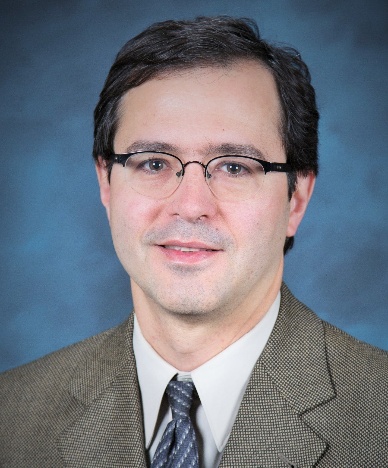
Fernando L. Teixeira is a Professor in the Department of Electrical and Computer Engineering at The Ohio State University (OSU), where he is also affiliated with the ElectroScience Laboratory and the Center for Quantum Information Science and Engineering.
He received the Ph.D. degree from the University of Illinois of Urbana-Champaign in 1999, and M.S. and B.S. degrees from the Pontifical Catholic University of Rio de Janeiro in 1991 and 1995, respectively. Prior to joining OSU, he was a Postdoctoral Research Associate in the Massachusetts Institute of Technology (1999-2000), and a Staff Engineer in the Department of Satellite Transmission at Embratel SA (1994-1996) and in the Brazilian Army Technological Center (1992-1994).
Dr. Teixeira research activities have spanned several areas, including computational electromagnetics, computational plasma physics, inverse scattering, reflector antennas, propagation, remote sensing, and process tomography. He has published over 230 journal papers, over 20 book chapters, and holds multiple US patents in those areas. He co-authored two books by Wiley/IEEE: Radiowave Propagation: Physics and Applications (2011) and Tropospheric and Ionospheric Effects on Global Navigation Satellite Systems (2022). He has served as the main advisor of over 25 PhD graduates.
He is a Fellow of IEEE and an Elected Member of the URSI (International Union of Radio Science) Commissions B and F. He is the recipient of several honors, including the Raj Mittra Outstanding Award from the University of Illinois, the National Science Foundation CAREER Award, the triennial Henry Booker Fellowship from the US National Committee of URSI, the IEEE Microwave Outstanding Young Engineer Award, and several research awards from OSU including the Lumley Research Award, the Commercialization Achievement Award, and the Harrison Faculty Award for Excellence in Engineering Education. He is also the recipient of two Certificates of Appreciation from the NASA Earth Sciences Technology Office.
Dr. Teixeira served as Associate Editor for IEEE Antennas and Wireless Propagation Letters and IET Microwaves, Antennas, and Propagation. He was as Guest Editor for special or cluster issues of Progress in Electromagnetics Research, IEEE Antennas and Wireless Propagation Letters, and IEEE Journal of Multiscale and Multiphysics Computational Techniques. He served as the chair of IEEE Columbus AP-S/MTT-S Joint Chapter.
2026 John Kraus Antenna Award
Prof. Hao Xin “For pioneering contributions to 3D-printed Luneburg lens antennas and radar architectures, enabling novel imaging and passive RF sensing with broad industrial impact.”

Hao Xin received his PhD in Physics from Massachusetts Institute of Technology in February 2001. He obtained his BS degree, Summa Cum Laude in Physics and Mathematics from University of Massachusetts Dartmouth in May 1995. He is currently a professor of Electrical and Computer Engineering and professor of Physics, and a Thomas R. Brown Endowed Fellow at the University of Arizona. He was an Arizona Engineering fellow from 2013 to 2016. He joined University of Arizona since August 2005. From 2000 to 2003, he was a research scientist with the Rockwell Scientific Company. He was a Sr. Principal Multidisciplinary Engineer with Raytheon Company from 2003 to 2005. He co-founded Lunewave Inc. and has been serving as the president / chief technology officer since 2017.
His primary research interests are in the area of microwave / millimeter wave / THz antennas, devices, circuits and their applications in wireless communication and sensing systems. His recent research activities have covered a broad range of high frequency technologies, including applications of new technologies and materials in microwave and millimeter wave circuits such as electromagnetic band gap crystals and other meta-materials, carbon nano-tubes devices, solid state devices and circuits, active or semi-active antennas, and passive circuits. He has also performed leading research in 3D printing technology for electromagnetic devices and systems since 2007. He has authored over 350 referred publications and more than 20 patents in the areas of microwave and millimeter-wave technologies, random power harvesting based on ferro-fluidic nano-particles and carbon nanotube based devices. The significance of Dr. Xin’s contributions is evident in both academic and industrial domains. He has won prestigious industrial awards such as the Automotive News PACEpilot Award and multiple Army xTech competition awards. These accomplishments demonstrate not only technical novelty but also societal and economic impact.
Dr. Xin’s recognition trajectory underscores the importance of his work. He is an IEEE Fellow, an IEEE Antennas and Propagation Society Distinguished Lecturer, a Da Vinci Fellow and Thomas R. Brown Endowed Fellow of the University of Arizona, and the recipient of the Arizona Governor’s Innovation Award. His leadership roles include serving as Associate Editor for IEEE Antennas and Wireless Propagation Magazine and IEEE Journal of RFID, as well as chairing the IEEE AP S Young Professionals Committee. He has mentored 19 Ph.D. students, 11 postdoctoral researchers, and more than 100 undergraduates, ensuring the continuity of innovation in antenna engineering.
2026 Lot Shafai Mid-Career
Distinguished Achievement Award
Dr. Sema Dumanli “For pioneering wireless in-body molecular sensing using biohybrid implant antennas, and for advancing equitable access to healthcare worldwide through innovative technologies.”
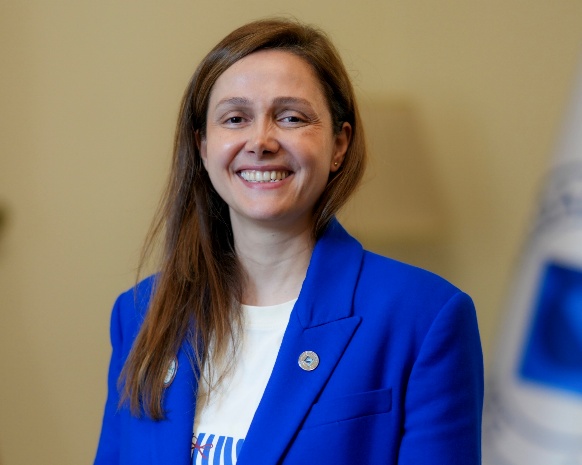
Sema Dumanli received her B.Sc. degree in electrical and electronic engineering from Orta Dogu Teknik Universitesi, Ankara, Turkey, in 2006, and her Ph.D. degree from the University of Bristol, Bristol, U.K., in 2010. She worked for Toshiba Research Europe, Bristol, as a Research Engineer and a Senior Research Engineer from 2010 to 2017. She is currently an Associate Professor at Bogazici University, Istanbul. She is the founder and the director of Boğaziçi University Antennas and Propagation Research Laboratory (BOUNtenna) and Bioelectromagnetics Laboratory (AntennAlive).
Her current research interests include antenna design for implantable and wearable devices, in-body sensor design, biohybrid implants, chipless RF-ID sensors and multi-scale communications. She pioneered wireless in-body molecular sensing using biohybrid implant antennas linking electromagnetics with synthetic biology. She has authored over 65 peer-reviewed publications and holds 6 patents.
Dr. Dumanli is the recipient of the Science Academy Turkiye’s Young Scientist Award (BAGEP) 2025, the IEEE APS Donald G. Dudley Jr. Undergraduate Teaching Award 2022, and a three-time recipient of the Bogazici University Excellence in Teaching Award. She serves as the Chair of the IEEE AP/MTT/EMC/ED Turkey Joint Chapter, Vice-Chair of the IEEE AP-S Young Professionals Committee, and Associate Editor for the IEEE AP-S Digital Communications and the IEEE Open Journal of Antennas and Propagation. She is a member of the IEEE AP-S TC11 Medicine and Biology and MTT-S TC25 RFID, Wireless Sensor, and IoT Technical Committees. Dr. Dumanli also serves as a board member and Secretary of URSI Turkey, and Chair of URSI Turkey Commission K.
Last but not least she is Demir Ali's mum often referred to as "mamasimo" by him.
2026 Harrington-Mittra Award in Computational Electromagnetics
Prof. Giuseppe Vecchi “For pioneering innovations in integral equation methods for multiscale problems and for advancing new applications in computational electromagnetics.”
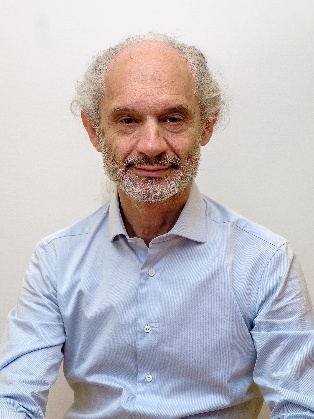
Giuseppe Vecchi received the Laurea and Ph.D. (Dottorato di Ricerca) degrees in electronic engineering from Politecnico di Torino, Torino, Italy, in 1985 and 1989, respectively, with doctoral research carried out partly at Polytechnic University (Farmingdale, NY). He was a Visiting Scientist with Polytechnic University in 1989-1990, and since 1990 he is with the Department of Electronics, Politecnico di Torino, where he has been Assistant Professor, Associate Professor (1992 – 2000), and Professor. He was a Visiting Scientist at the University of Helsinki, Helsinki, Finland, in 1992, and has been an Adjunct Faculty in the Department of Electrical and Computer Engineering, University of Illinois at Chicago, 1997-2011. Since 2015 he serves as the Director of the Antenna and EMC Lab (LACE) at Politecnico. Prof. Vecchi is a Fellow of the IEEE, and member of the Board of the European School of Antennas (ESOA), and a member of the IEEE Antennas and Propagation Standard Committee. He has been an Associate Editor of the IEEE Transactions on Antennas and Propagation, Chairman of the IEEE AP/MTT/ED Italian joint Chapter, and member of the IEEE-APS Educational Committee.
His current research activities concern analytical and numerical techniques for design, measurement and diagnostics of antennas and devices, medical applications, and imaging.
2026 Donald G. Dudley Jr. Undergraduate Teaching Award
Dr. Haihan Sun “For passionate and impactful teaching and mentorship of undergraduate students in electromagnetics, and for fostering engagement at the local, national, and international levels.”

Haihan Sun is an Assistant Professor in the Department of Electrical and Computer Engineering at the University of Wisconsin–Madison. She received her bachelor’s degree in Electrical Engineering from Beijing University of Posts and Telecommunications, China, in 2015, and her Ph. D. degree in Applied Electromagnetics from the University of Technology Sydney, Australia, in 2019. She worked as a Postdoctoral Research Fellow at Nanyang Technological University, Singapore, from 2019 to 2023. Her research interests include antennas, ground-penetrating radar, microwave sensing, and nondestructive testing. She was the recipient of several Young Professional and Student Paper honors and awards at international conferences. She received the IEEE Antennas and Propagation Society (AP-S) Mojgan Daneshmand Grant in 2021. She was named an IEEE AP-S Young Professional Ambassador in 2024, and was recognized as an Outstanding Associate Editor for both IEEE Antennas and Wireless Propagation Letters and IEEE Open Journal of Antennas and Propagation in 2025. She received the U.S. National Science Foundation CAREER Award in 2026. She currently serves as an Associate Editor for IEEE Antennas and Wireless Propagation Letters and IEEE Transactions on Geoscience and Remote Sensing.
2026 Distinguished Industry Leader Award
Dr. Diego Caratelli “For distinguished industry leadership in advancing and commercializing MIMO antenna technologies, enabling next-generation enterprise WiFi systems and delivering transformative impact across the global networking industry.”

Diego Caratelli (SMIEEE’19) was born in Latina, Italy, in 1975. He received the Laurea (summa cum laude) and Ph.D. degrees in electronic engineering and the M.Sc. degree (summa cum laude) in applied mathematics from Sapienza University of Rome, Italy, in 2000, 2004, and 2013, respectively. He also received the MicroMasters in manufacturing, finance, and data science from the Massachusetts Institute of Technology, Cambridge, Massachusetts, USA, in 2022, 2023, and 2025, respectively.
From 2005 to 2007, he served as a Research Fellow in the Department of Electronic Engineering at Sapienza University of Rome. From 2007 to 2013, he was a Senior Researcher with the International Research Center for Telecommunications and Radar, Delft University of Technology, The Netherlands. From 2015 to 2019, he was an Associate Professor with the Institute of Cybernetics, Tomsk Polytechnic University, Russia. In 2013, he co-founded The Antenna Company, Eindhoven, The Netherlands, where he currently serves as Chief Technology Officer / Vice-President of Engineering and is responsible for product development, program portfolio management, and technical direction of the research and development team. From 2020 to 2025, he was an Associate Professor with the Group of Electromagnetics in Wireless Telecommunications, Eindhoven University of Technology, The Netherlands, where he has been a Full Professor since September 2025. He has authored or co-authored more than 250 publications in international peer-reviewed journals, book chapters, and conference proceedings. He holds 32 families of patents in antenna-related technologies and advanced computational techniques. His current research interests include the full-wave analysis and design of passive devices and antennas for satellite, wireless, and radar applications, the development of analytically based numerical techniques devoted to the modeling of wave propagation and diffraction processes, the theory of special functions for electromagnetics, the deterministic synthesis of sparse antenna arrays, and the solution of boundary-value problems for partial differential equations of mathematical physics.
Prof. Caratelli has been Vice-Chair of the Technical Committee on Antenna Arrays and Systems of the IEEE Antennas and Propagation Society since 2025 and is currently a member of the Applied Computational Electromagnetics Society (ACES), the Institution of Engineering and Technology (IET), the International Union of Radio Science (URSI), the Italian Electromagnetic Society (SIEm), and the Institute of Electrical and Electronics Engineers (IEEE). He was a recipient of the Young Antenna Engineer Prize at the 32nd European Space Agency Antenna Workshop and the 2010 Best Paper Award from ACES. He was a co-recipient of the Frost and Sullivan Best Practices Award for technology innovation in advanced antennas for wireless communications in 2016. He is the Lead Guest Editor of the Special Issues on Antenna Array Design for Wireless Communications and Remote Sensing of MDPI Sensors and on Advanced Antenna Array Development for mm-Wave Communications of Wiley International Journal of Antennas and Propagation, as well as of the Special Issue on Theory and Applications of Special Functions in Mathematical Physics of MDPI Symmetry. Dr. Caratelli has served as the General TPC Chair for the European Microwave Week (EuMW) in 2025.
His students and collaborators received the IEEE MTT-S Central-Southern Italy Award with Honorable Mention in 2014, as well as the TICRA Foundation Grant, and an Honorable Mention at the IEEE AP-S/URSI Symposium in 2022.
2026 Industrial Innovation Award
Dr. Aycan Erentok “For pioneering high-performance, mechanically integrated, miniaturized antennas for mobile and wearable devices, and for innovations in body-integrated antenna systems for electric vehicles.”

Aycan Erentok is a Senior Manager of Antenna Engineering at Tesla, where he leads antenna design and wireless system integration across its vehicle and robotics platforms. He has over 20 years of combined research and industry experience in electrically small antennas, full-lifecycle antenna development, electromagnetic integration spanning kHz to mmWave frequencies, and high-volume wireless product development.
He earned his Ph.D. in Electrical Engineering from the University of Arizona, where his research focused on electrically small antennas and metamaterial-based and inspired antenna concepts under the supervision of Professor Richard W. Ziolkowski.
Since joining Tesla in 2017, he has led the development of integrated antenna architectures supporting cellular, Bluetooth, GNSS, FM/DAB, UHF, and radar connectivity systems. His work focuses on body-integrated and hidden antenna solutions that improve system performance, enable industrial design flexibility, and reduce hardware complexity across Tesla vehicle and robotics platforms. His body-integrated connectivity architecture, first introduced in the Model Y program, has since become a standard antenna integration approach across Tesla vehicle platforms.
Prior to Tesla, Dr. Erentok held antenna engineering leadership roles at Intel and Nokia, where he contributed to antenna technologies deployed in tens of millions of mobile and wearable devices.
2026 Standards Development Award
Michael Francis “For leadership and impactful contributions to standardization within the IEEE Antennas and Propagation Society.”

Michael H. Francis received the Bachelor’s Degree in physics in 1973 and a Master’s Degree in 1976, both from the University of Colorado. He was a research assistant at the University of Colorado from 1974 – 1980, where he studied the solar chromosphere-corona transition region.
He joined the National Institute of Standards and Technology (then the National Bureau of Standards) Antenna Metrology Group in 1980. His research has been primarily in the theory and practice of near-field measurements. He has participated in the development of probe-position correction methods at NIST for both planar and spherical near-field measurement techniques. He specializes in uncertainty analysis methods for near-field antenna measurements. He was the project leader for the NIST/Boulder team that performed the electromagnetic testing of the prototype ePassport and ePassport reader. He organized and lectured at the NIST biannual near-field short course for twenty-five years and also lectured at the Georgia Tech Near-Field short course in Boulder for many years. He has received the US Department of Commerce Bronze, Silver and Gold Medals. Mike retired from NIST in December 2016 but continues working part time as a Guest Researcher at NIST.
He is a Life Senior Member of the IEEE and a former chair of the IEEE Antenna Standards Committee (for over ten years) and a former chair of the IEEE Near-Field Antenna Working Group (when it developed the first version of the Near-Field Antenna Measurement Standard IEEE 1720). He has participated in the development of several revisions to IEEE Standards, for example, IEEE Standards 145 (Antenna Definitions), 1720 (Near-Field Antenna Measurements) and 149 (Antenna Measurements).
Mike has been the Senior Advisor to the Antenna Measurement Techniques Association (AMTA) Board of Directors since 2002. He received the AMTA Distinguished Service Award in 2004, the AMTA Distinguished Achievement Award in 2010 and the AMTA Honorary Life Fellow Award in 2017.
Mike has been a volunteer with Special Olympics for more than 35 years.
2026 Distinguished Service Award
Prof. Konstantina Nikita “For transformative leadership and exceptional service in advancing the publications, visibility, and global impact of the IEEE Antennas and Propagation Society.”

Konstantina S. Nikita is a Professor at the School of Electrical and Computer Engineering, National Technical University of Athens (NTUA), the Irene McCulloch Distinguished Adjunct Professor of Biomedical Engineering and Medicine at the Viterbi School of Engineering and Keck School of Medicine, University of Southern California, and served as a Global Chair of the University of Bath, UK, during 2022–2023. She is the Director of the Mobile Radiocommunications Laboratory and the Founder and Director of the Biomedical Simulations and Imaging Laboratory at NTUA. Dr. Nikita received her M.Eng. in Electrical Engineering and her Ph.D. in Biomedical Engineering from NTUA, and her M.D. from the National and Kapodistrian University of Athens.
She has served as technical manager of numerous European and national R&D projects in both fundamental research and practical applications and has supervised more than 40 completed Ph.D. theses, several of which have received prestigious awards. She has also served as Chair of the LS7 Consolidator Grant Panel of the European Research Council (ERC), responsible for evaluating investigator-driven frontier research proposals in the life sciences. Her current research activities span a broad range of areas, including bioelectromagnetics, implantable antennas, mobile health, biomedical image computing and analytics, physiological systems modeling and identification, and intelligent healthcare systems.
Dr. Nikita is a Fellow of the IEEE, a Founding Fellow of the European Alliance for Medical and Biological Engineering and Science (EAMBES), and a Fellow of the American Institute for Medical and Biological Engineering (AIMBE). She has received numerous distinctions for her research contributions, including the Bodossakis Foundation Academic Prize.
Dr. Nikita is the Editor-in-Chief of the IEEE Transactions on Antennas and Propagation and the Founding Editor-in-Chief of the IEEE Open Journal of Antennas and Propagation.
2026 Service Award
Dr. George Shaker “For dedicated service in strengthening global engagement, student and member support, and industry participation in the IEEE Antennas and Propagation Society.”
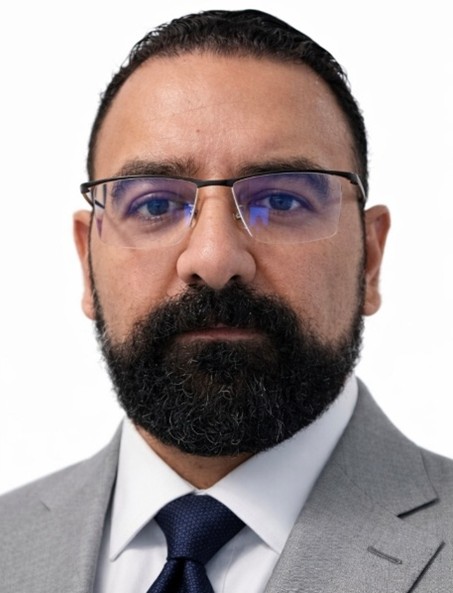
George Shaker (Senior Member, IEEE) received the B.Sc. degree in electrical and electronics engineering from Cairo University, Cairo, Egypt, in 2003, and the M.A.Sc. and Ph.D. degrees in electrical and computer engineering from the University of Waterloo, Waterloo, ON, Canada, in 2006 and 2014, respectively. As an NSERC Canada Graduate Scholar and NSERC Michael Smith Foreign Study Scholar, he completed research visits to the Georgia Institute of Technology, Atlanta, GA, USA, and IMST GmbH, Kamp-Lintfort, Germany. Dr. Shaker held multiple roles with Research In Motion (now BlackBerry Limited), Waterloo, ON, Canada, where he contributed to the development of wireless communication technologies. He has been with Spark Technology Laboratories since its founding in 2011, where he is the Chief Scientist, leading innovation in wireless sensing technologies for smart transportation. He is a Research Scientist with the Schlegel-UW Research Institute for Aging, Waterloo, ON, Canada, where he founded and directs "THE MIRADA — Technology for Health Empowerment: Monitoring, Intervention, and Response for Aging Demonstration Apartment," a living laboratory integrating radar, AI, and smart-home platforms to support older adults. Since 2014, he has also been an Adjunct Associate Professor with the Department of Electrical and Computer Engineering, University of Waterloo, where he directs the Wireless Sensors and Devices Laboratory, which he has built into a hub for translating research into deployed technology in partnership with multinationals, startups, and spin-offs.
Across these collaborations with industry, government, and academic partners, he has led multidisciplinary research teams whose work in electromagnetics, antenna systems, AI-enabled radar, bioelectromagnetics, and the Internet of Things (IoT) now underpins technologies for safer, healthier, and more connected communities, from in-cabin child-presence detection to non-contact eldercare monitoring and industrial IoT sensors. His contributions further extend across consumer electronics, augmented reality, aerospace and defense, agriculture, and logistics. He has carried much of this work to market through ventures he founded or advised, several of which have achieved successful exits. He has authored or co-authored more than 200 peer-reviewed publications and holds more than 35 patents and patent applications, with several of his papers earning IEEE Best Paper Awards and ranking among the Top Downloaded on IEEE Xplore.
Dr. Shaker is an i2I Canada Fellow and an IEEE Sensors Council Distinguished Lecturer (2025–2027). He is also Vice-Chair of the IEEE MTT-S Technical Committee on Autonomous Systems. Within the IEEE Antennas and Propagation Society, he is the inaugural Chair of the Technical Committee on Environment, Sustainability, and Societal Impacts and Chair of the Membership and Benefits Committee, as well as the Society's Representative to the IEEE Sensors Council. As past Chair of the Travel Grants subcommittee, he expanded the program from roughly ten awards per year to more than one hundred and established its African Nations and Latin America cluster awards.
2026 IEEE AP-S Paper Awards
IEEE AP-S Sergei A. Schelkonuff Transactions Prize Paper Award
IEEE AP-S Harold A. Wheeler Application Prize Paper Award
IEEE AP-S R.W.P. King Award
IEEE AP-S Piergiorgio L.E. Uslenghi Prize Paper Award
IEEE AP-S Acharya Jagadish Chandra Bose Paper Award
IEEE AP-S Edward E. Altshuler Prize Paper Award
IEEE OJAP Best Paper Award