

The IEEE Antennas and Propagation Society (AP-S) John Volakis Travel Grant (JVTG) for Graduate Students aims to help graduate students attend the annual IEEE International Symposium on Antennas and Propagation and further their research work in the field of antennas and propagation.
This year for the 2026 IEEE International Symposium on Antennas & Propagation and North American Radio Science Meeting to be held on July 12–17, 2026 in Detroit, Michigan, USA; we are pleased to announce that the following recipients have been selected by the IEEE AP-S Member and Geographic Activities Committee (coordinated by Prof. Mahesh P. Abegaonkar).

Furong Yang is currently pursuing the Ph.D. degree in Engineering at King’s College London, London, U.K. His research interests include flexible and stretchable antennas, soft electronics, and RF systems for wireless communication and energy harvesting applications.
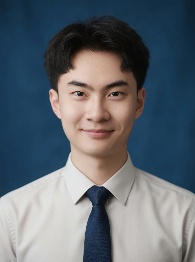
Yuqi He has been awarded the grant to further his research and to present his paper entitled “Dual-Circularly-Polarized Wide-Angle Scanning Antenna Array with Element-Engineered Entire Upper Hemisphere 3-dB Axial-Ratio Beamwidth”. He is currently pursuing his Ph.D. degree with his advisor Prof. Wei Lin at The Hong Kong Polytechnic University, Hong Kong. His research focuses on wide-angle scanning antenna arrays for wireless power transfer (WPT).

Dong-Hao Han is currently working toward the Ph.D. degree with Zhejiang University, Hangzhou, China. Since September 2022, he has been with Prof. Xing-Chang Wei’s Group, Zhejiang University. His current research interests include near-field analysis, electromagnetic compatibility for high-speed circuits, metasurface, and deep learning.
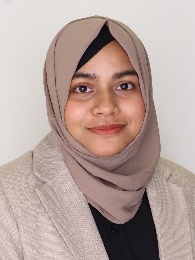
Tasin Nusratn is pursuing her Ph.D. studies at the University of South Florida, where she is working as a graduate research assistant in the Wireless Sensing and Systems Research Group under the supervision of Dr. Stavros Vakalis. Her research focuses on radar imaging, millimeter-wave wireless systems, distributed radar repeater apertures, and wireless communications. Her work has received broad recognition, including 2022 IEEE Antennas and Propagation Society Eugene F. Knott Memorial Pre-Doctoral Research Grant.

Jeonghyo Lee is currently pursuing the Ph.D. degree in electrical engineering with the Pohang University of Science and Technology, Pohang, South Korea. His current research interests include antenna-in-package for millimeter-wave 5G mobile communication, antenna-on-display for wireless communication, and sub-THz wireless communication systems. He has received several awards, including the Honorable Mention at the IEEE AP-S Student Paper Competition in 2024 and 2025, the IEEE AP-S 2024 TICRA Travel Grant, the Finalist at the IEEE AP-S 2026 Student Design Contest, the Finalist for the Best Antenna Theory and Design Paper Award at EuCAP 2026.

Akhila Gouda is pursuing a Ph.D. degree with the Department of Electrical Engineering, IIT Indore, Indore, Madhya Pradesh, India. His current research interests include conformal frequency selective surface, reconfigurable intelligent surfaces, and 3-D printing. He is a recipient of IEEE AP-S Fellowship Award for Graduate Students in 2024, the Prime Minister Research Fellowship (PMRF), Government of India in 2023, the International Mobility Grant by College Doctoral de Bretagne, France in 2023, and IEEE AP-S Student Travel Grant in 2023.
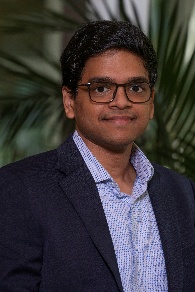
Sree Adinarayana Dasari is currently pursuing Ph.D. degree in electrical engineering at Georgia Institute of Technology, Atlanta, GA, USA. He was a module design engineering intern at the Advanced Cellular Group, Qorvo, Greensboro, NC, USA, in summer 2025 and 2026. He has co- authored 6 peer-reviewed journal articles and 13 conference publications. His research interests include on-chip antennas, antenna arrays, vanadium dioxide phase change material, mmWave measurement techniques, and wireless power harvesting.
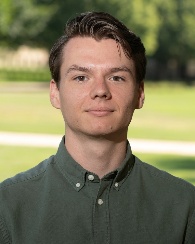
Benjamin Davis is currently pursuing the Ph.D. degree in electrical engineering at the University of Notre Dame, Notre Dame, IN, USA. His research focuses on novel design and additive manufacturing techniques for low-profile, high-performance Gradient-Index (GRIN) lenses.

Description: Provide AP-S awards travel grants annually to help graduate students attend the annual IEEE International Symposium on Antennas and Propagation.
Administration: IEEE Antennas and Propagation Society
Eligibility: Recipients must:
- Be a graduate student (MS or PhD) at the time of application enrolled in electrical engineering or a related field at an accredited institution of higher learning.
- Be an IEEE AP-S student member.
- Have the endorsement of a faculty advisor who is a member of IEEE AP-S.
- Have submitted at least one first-authored paper to be presented at the AP-S Symposium.
- Student must show an interest in pursuing a career in Antennas and Propagation
- A student may receive only one travel grant. Previous award winners are not eligible. An advisor may endorse only one applicant at a time.
Prize: Multiple Awards Given Annually. Each recipient receives full prize. Up to eight (8) grants to be given each year, nominally $1,500 each. The grant does not include the conference registration fee.
Frequency: The Travel Grants will be presented annually. Travel Grants will be given only if suitable awardees are identified.
Funds: The IEEE Antennas and Propagation Society Talent Development Fund, which functions as an endowment, was approved by the IEEE Foundation during its September 15th, 2024, board meeting. Active fundraising began in July 2024 with the guidance of IEEE Foundation staff and AP-S leadership with a goal to secure US$3 million in donations. At the time of this submission, $742,000 has been received into the Fund, and an additional $24,000 in pledged support is anticipated by March 1, 2025. The Fund will support initiatives, including the John Volakis Travel Grant, related to students (undergraduate and graduate) and early career/young professionals (practitioners and researchers). $12,325 from the Fund annually will support the John Volakis Travel Grant awards and associated administrative costs. This amount may increase based on additional contribution to John Volakis Travel Grant
Nominee Solicitation: To guarantee a comprehensive and varied selection of eligible candidates, the annual call for travel grants will be extensively publicized through the AP-S Magazine, the AP-S Website, social media and IEEE AP-S flagship conference website. Participants must be active student members of the IEEE Antennas and Propagation Society. Self-nominations are permitted. Endorsement of a faculty advisor who is a member of IEEE AP-S is required.
Award Committee: The Award Committee of IEEE AP-S John Volakis Travel Grant for Graduate Students is appointed and oversighted by the IEEE AP-S Member and Geographic Activities Committee Chair. It consists of 5-10 judge panel of experts including the chair who must be active and well qualified members of the IEEE Antennas and Propagation Society. This Committee constitutes a sub-committee of the IEEE AP-S Member and Geographic Activities Committee. The term of the Chair and of the Members is 1 year renewable with a maximum of 3 consecutive terms. At the end of the evaluation process the award committee makes the recommendation to the IEEE AP-S Member and Geographic Activities Committee Chair, who approves the final decision. The quorum is >70% of the number of voting members of the committee. For the John Volakis Travel Grant, former students and donors to this travel award desire to be part of the selection committee.
Schedule: The announcement of the travel grants is September 1, the submission of nominations/projects/deliverables opens contemporarily to the submission of IEEE AP-S flagship conference and closes with the submission deadline. The awards committee makes the recommendation to the IEEE AP-S Member and Geographic Activities Committee Chair by March 1 of the following year, and the winners are notified as early as possible after March 1. Award winners are to be notified via email by the chair of the AP-S Award Committee Chair.
Selection/Basis for Judging: Applications must be submitted by the deadline and must include all items listed below to be considered for review. All application materials must be written in English and be integrated into a single PDF document:
- Completed application form.
- First-authored conference paper to be presented at the AP-S Symposium.
- Brief curriculum vitae or resume no more than two pages long that includes periods of attendance at all schools, expected and completed graduation dates, and a list of published and submitted journal and conference papers.
- Recommendation letter from a faculty advisor, who must be a member of the IEEE AP-S. The letter should discuss the student’s aptitude to perform the research, and provide justification for the student’s need for the travel grant.
Selection will be based on the following criteria:
- A first-authored conference paper accepted for presentation at the AP-S Symposium.
- Recommendation letter, with particular emphasis on the items listed in the last bullet above.
Presentation: Recipients are notified via email by the IEEE AP-S Member and Geographic Activities Committee Chair.
Publicity: Awardees will be widely publicized in the IEEE Antennas and Propagation Society Website.